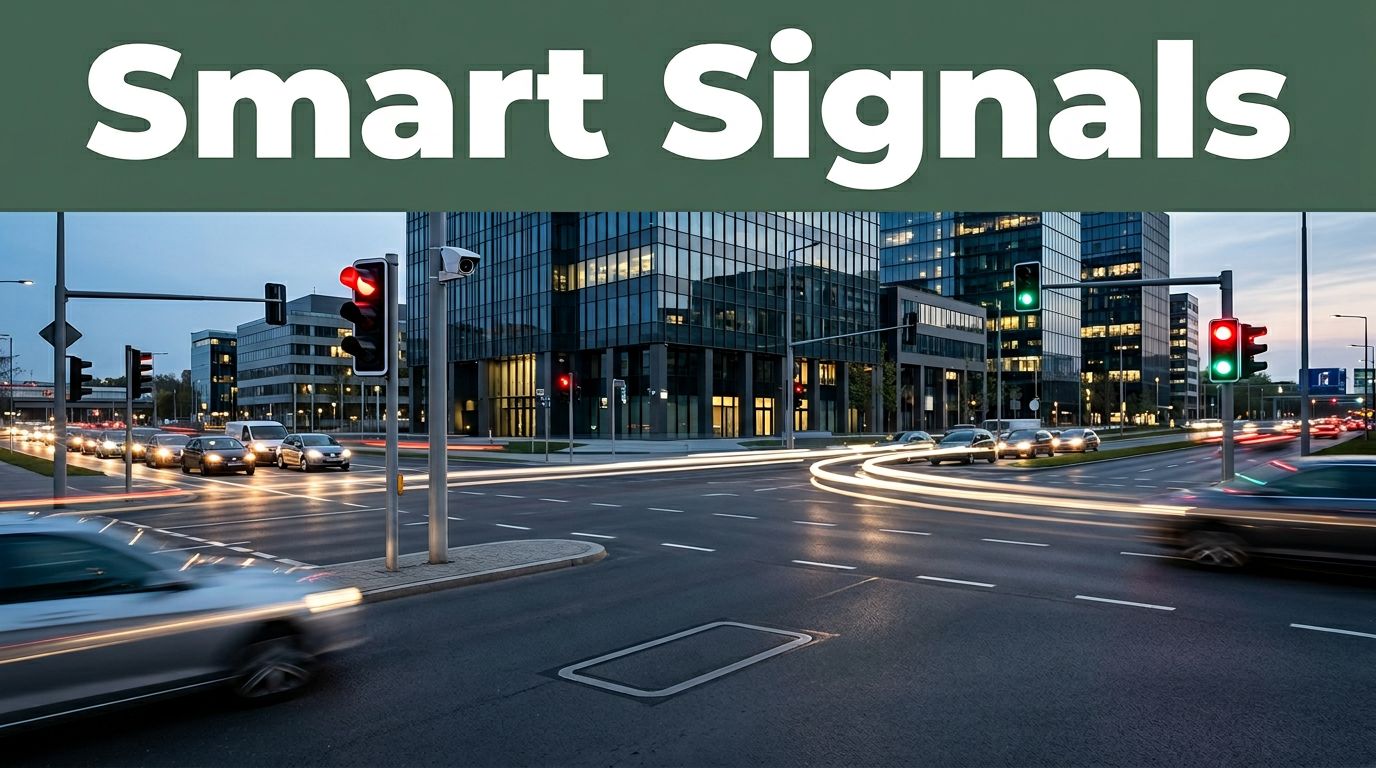
You’ve probably sat at a red light with no cars around. Maybe you waited anyway, even though your route felt empty. That mismatch happens when a light follows a fixed rhythm.
Modern traffic monitoring systems change that. Instead of using only timers, many intersections watch what’s happening right now. Sensors spot cars, bikes, and pedestrians. Then a controller updates the signal timing in real time.
In plain terms, the system works like a traffic “manager” on call. It checks the situation, then calls the next green phase with fewer needless waits. As a result, roads move more smoothly and drivers spend less time idling.
So how does traffic monitoring actually control traffic lights? You’ll see the main parts of the system and what each one does. First, you’ll compare fixed-time signals to actuated and adaptive signals. Next, you’ll learn about common sensors, from loop detectors to cameras and radar. After that, you’ll follow the real-time adjustment process step by step. Finally, you’ll look at benefits, real examples, and what’s improving in 2026.
Fixed Lights vs. Smart Ones: Understanding the Two Main Types
Most older intersections run on fixed-time signals. The timing plan is set ahead of time. Then the lights cycle through phases on a schedule, no matter what traffic does.
That’s like a restaurant kitchen that always sends out meals at the same times. If one table has a slow server, the timing still won’t change. With roads, the downside is obvious. If your direction is empty, you may still wait for the next cycle.
Smart systems work differently. Many use actuated signals and adaptive signal control. Actuated means the signal responds to detection events. Adaptive means it also adjusts timing patterns based on changing traffic across time.
Think of fixed timing as a rigid alarm clock. Smart timing is more like a person who checks the room first. If nobody’s awake, they don’t start the whole routine.
At the center of this shift sits the traffic signal controller. It’s the “brain” in the cabinet. It receives sensor data and then chooses what the lights should do next.
Smart traffic monitoring can also coordinate multiple intersections. When signals work together, you get smoother “green waves” along busy corridors. Even when traffic isn’t heavy, the system can reduce wasted seconds.
There are trade-offs, too. Fixed-time setups can be simpler to install and maintain. Smart systems often need more hardware and tuning. Still, once they’re configured, they usually provide better timing decisions because they react to real conditions instead of guesses.
Sensors on the Ground and in the Sky: Tools That Spot Your Car
Traffic monitoring systems rely on sensors to answer one question: What do we need right now? Some sensors detect vehicles only. Others can estimate queues. Many also help detect bikes and pedestrians for safer crossing times.
Sensors can be placed in the pavement, on poles, or mounted high above streets. Then they send measurements to the controller.
A key idea helps everything make sense. The controller doesn’t “see” the way you do. It receives data, then applies timing rules. Those rules can be pre-set plans, plus real-time updates.
To understand the hardware, it helps to group sensors into two categories:
- In-road detection (ground-level)
- Above-ground detection (cameras, radar, and LiDAR)
In recent years, many agencies have also moved toward sensor fusion. That means using multiple sensors together. Fusion can improve reliability when one sensor struggles. For example, video may struggle in glare. Radar can still detect motion and speed.
For a deeper look at how agencies select and use detectors, see the FHWA Traffic Detector Handbook, Chapter 2. It lays out practical detector concepts in a way that helps explain why each type exists.
Loops Buried in the Road: The Classic Detector
Inductive loop detectors are one of the most familiar ways signals detect vehicles. They’re literally wires embedded under the pavement.
When cars drive over the loop, the car’s metal changes the magnetic field. That disturbance triggers a detection event. The system then knows a vehicle is present. It can also estimate how long traffic stays in the detected area.
This approach has big strengths. Loops work in rain and snow. They don’t depend on good lighting. They also provide consistent “hits” when vehicles pass over them.
Still, there are downsides. Loops can be hard to repair because pavement work is involved. Also, detecting bikes can be tougher, especially for smaller or lighter vehicles. Pedestrians are even harder since they’re not always metal-heavy enough to trigger strongly.
Even with those limits, loops remain popular because they’re proven. In many locations, they still provide reliable presence detection for actuation.

Cameras and Radar Watching from Above
Above the street, cameras and radar act more like “watchers” than trip wires.
Video cameras with AI can count vehicles, estimate speed, and classify objects. They can also track queues in a lane. In good conditions, this can reduce the need for as many in-road cuts.
Radar adds strength when weather gets messy. Rain, fog, and glare can affect video quality. Radar can still detect motion and distance. Many systems use both for more dependable readings.
LiDAR takes tracking further. It creates a 3D map of what’s moving in front of it. That can help with precise detection near stop lines and confusing intersections. LiDAR is also used in some advanced deployments, especially where accuracy matters most.
Because these sensors sit above the roadway, maintenance can be easier than repairing pavement loops. By 2026, many agencies are choosing above-ground detection more often. That shift can reduce disruption for roadwork.
Other Smart Sensors for Pedestrians and More
Vehicles aren’t the only thing signals must manage. Sidewalks, crosswalks, and bike lanes need the same attention.
Some intersections use thermal or infrared sensors to detect heat signatures. Others use press pads or piezo sensors for pedestrian presence. Piezo technology responds to pressure changes, which can work well for crosswalks where people step onto a detection area.
Many modern systems also combine multiple detection modes. That helps with reliability and safety. If a sensor misses a pedestrian, another can catch the demand. It’s not magic. It’s redundancy built for real streets.
If you’ve ever wondered how traffic lights detect vehicles and why sometimes it feels slow, this overview on How Traffic Lights Detect Your Vehicle explains the basic detection logic in an easy way.
Most importantly, good monitoring doesn’t just make cars move. It helps intersections serve everyone safely, including people on foot and riders on bikes.
From Detection to Green Light: The Real-Time Adjustment Process
Here’s the moment everything clicks. Sensors detect demand, data reaches the controller, and the signal updates.
The process often follows a simple rhythm, even when the software underneath is complex. First, the monitoring system measures what’s happening now. Next, the controller decides which phase should get more time. Then it coordinates timing rules to keep the intersection safe.
Picture the controller as a careful conductor. It doesn’t change every note. It responds quickly when the music needs adjustment.
Also, signals must follow safety rules. Even if a direction needs green, the system can’t skip clearance times. That means every decision has guardrails, like all-red periods that clear the crossing area.
Step 1: Spotting the Traffic Demand
Sensors send fresh data continuously or in frequent updates.
For vehicle movement, the system looks for things like:
- arrival patterns (when vehicles show up)
- queue length (how many are waiting)
- speed and movement (are vehicles still flowing or stopped)
- turning demand (left turns can need different timing than through traffic)
For pedestrians and bikes, demand can come from crosswalk detectors, push buttons, or overhead detection. In safer designs, the system may confirm both presence and movement patterns.
This stage is where “real-time” actually starts. Without current detection, the controller is only guessing.
Step 2: Controller Makes the Call
Next, the controller compares the live data to timing plans.
It may decide to extend a green phase if demand is still strong. It may also cut a phase short if traffic clears quickly. In some cases, it can skip a step when there’s no demand.
The controller often uses pre-approved logic. For example, it keeps minimum greens and maximum greens. It also ensures conflicting movements never get a green at the same time.
In other words, the controller is flexible, but it stays within safe limits.
Step 3: Coordinating Multiple Lights
One intersection can help you. A corridor can help you more.
When cities coordinate intersections, they aim to reduce stop-and-go waves. That means timing one intersection’s green to support the next one downstream.
Some deployments also adjust in real time based on corridor patterns. This can create smoother flow during peak hours without changing the entire timing plan each time.
If you want a sense of measurable results from adaptive deployments, the U.S. DOT ITS database has entries on signal systems that reduced delay in multiple metropolitan areas. For example, see Adaptive signal control systems deployed in five metropolitan areas.
Why It Matters: Cutting Congestion, Boosting Safety, and Real Examples
Traffic monitoring systems improve more than drive times. They can reduce harsh stops and long waits. They can also make intersections safer for pedestrians and cyclists.
Here are the benefits that show up in real streets.
Shorter waits and fewer idle seconds
When the system detects demand, it doesn’t force every direction to wait its turn. So you spend less time at red with no crossing activity nearby.
Less congestion and smoother flow
Adaptive timing can reduce bottlenecks. When green time matches actual demand, queues tend to form less often.
Safer intersections for all users
Pedestrian detection helps reduce risky gaps in crossing time. Better bike detection can also reduce near-misses at side streets.
Remote updates and faster fixes
Instead of replacing every timing plan by hand, many systems let engineers adjust timing strategies remotely. That reduces downtime and improves response.
If you want a local example, Boston’s Project Green Light is a well-known effort aimed at reducing delays and unnecessary stops. You can read about it on Project Green Light on Boston.gov.
And beyond cities, there are also corridor-level optimization efforts. Some deployments work with vendors to update timing strategies and coordination based on data from the field. For example, Econolite shares a Corona citywide traffic signal optimization case study that highlights corridor improvements through better signal timing.
The common thread is simple: monitoring provides the facts, and the signal uses those facts. Then the intersection makes fewer “wrong” timing calls.
2026 Breakthroughs: AI, Connected Cars, and Smarter Cities Ahead
By 2026, traffic monitoring is getting smarter, not just busier.
One big trend is better AI detection. Instead of only counting vehicles, AI-based sensors can estimate patterns earlier. They can spot queues forming and adjust timing before the congestion spreads.
Another trend is edge computing. Some systems process data right at the intersection. That can reduce delays in sending information to distant servers. As a result, decisions can happen faster when traffic changes quickly.
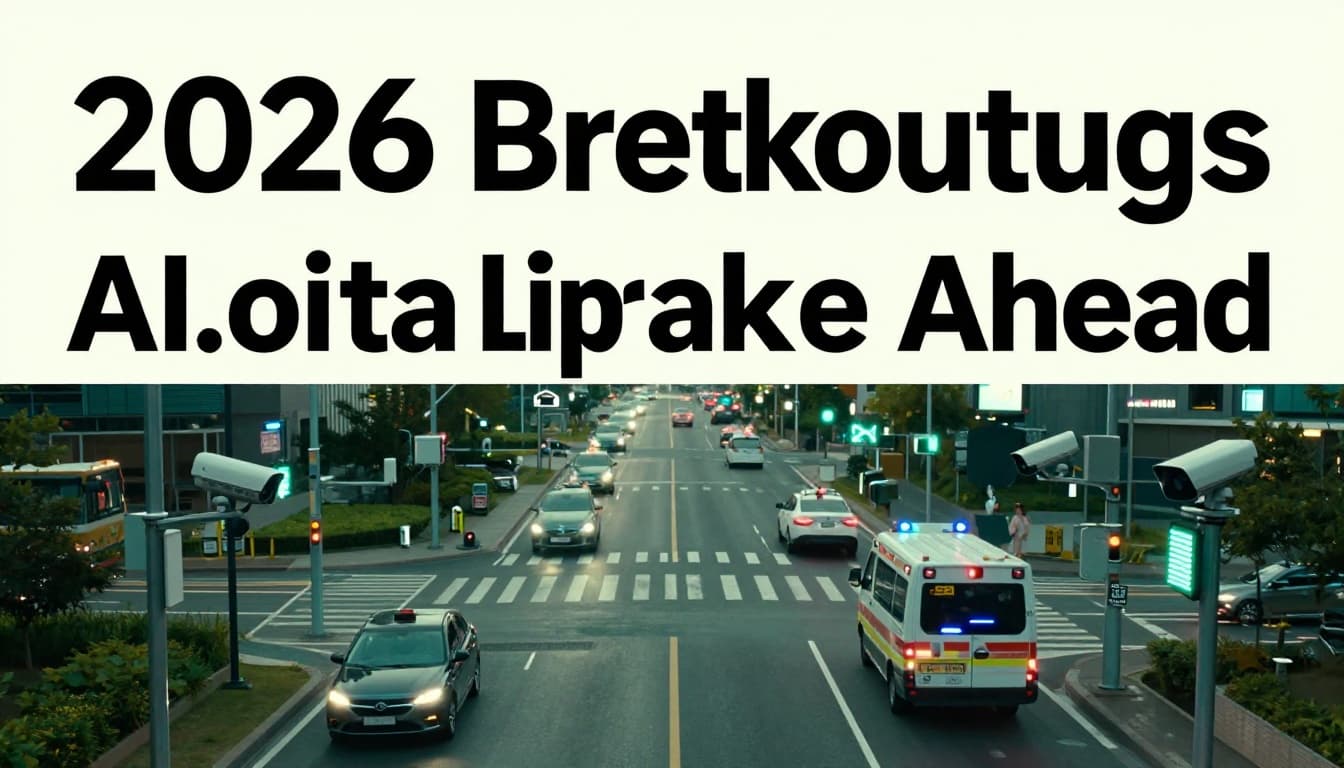
Then there’s communication. V2X (vehicle-to-everything) aims to connect vehicles and infrastructure. In practice, it can help signals consider approaching emergency vehicles or transit buses. It also opens the door to more coordinated timing based on what’s coming next, not just what’s already at the stop line.
For a clearer look at how V2X fits into smart signal safety and operation, see V2X for Smart Traffic Signals: Enhancing Safety.
Finally, expect more “hybrid” builds. Many cities still use proven hardware in-road, but they add above-ground detection where it reduces maintenance. That reduces the need to cut pavement as often. It also helps teams validate detection across multiple sensor types.
As these systems improve, the goal stays human. You want a green light when it helps you move. You want a safe crossing when you walk. You want fewer tense moments at complicated intersections.
Conclusion
Traffic monitoring systems control traffic lights by doing two things well: detecting what’s happening and changing timing rules in response. Sensors watch roads for vehicle queues, speed, and pedestrian demand. Then a traffic controller uses that data to extend phases, shorten them, and coordinate multiple intersections.
That’s why smart signals can cut those pointless waits. It also explains the safety gains, since pedestrian and bike detection helps protect crossing phases.
And the direction for 2026 is clear. AI improves detection, edge processing speeds decisions, and connected-vehicle ideas like V2X push signals toward faster, safer coordination.
Next time you hit a light that finally makes sense, share the experience with your local road team. Ask whether your corridor could use smarter monitoring too.