What if most crashes could be prevented before anyone even hits the brakes? In the US, about 94% of crashes trace back to driver error. That means the road is only half the story, in March 2026.
Even when roads improve, distracted driving still adds danger fast. Early 2026 forecasts put around 3,250 deaths and 360,000 injuries tied to distractions alone.
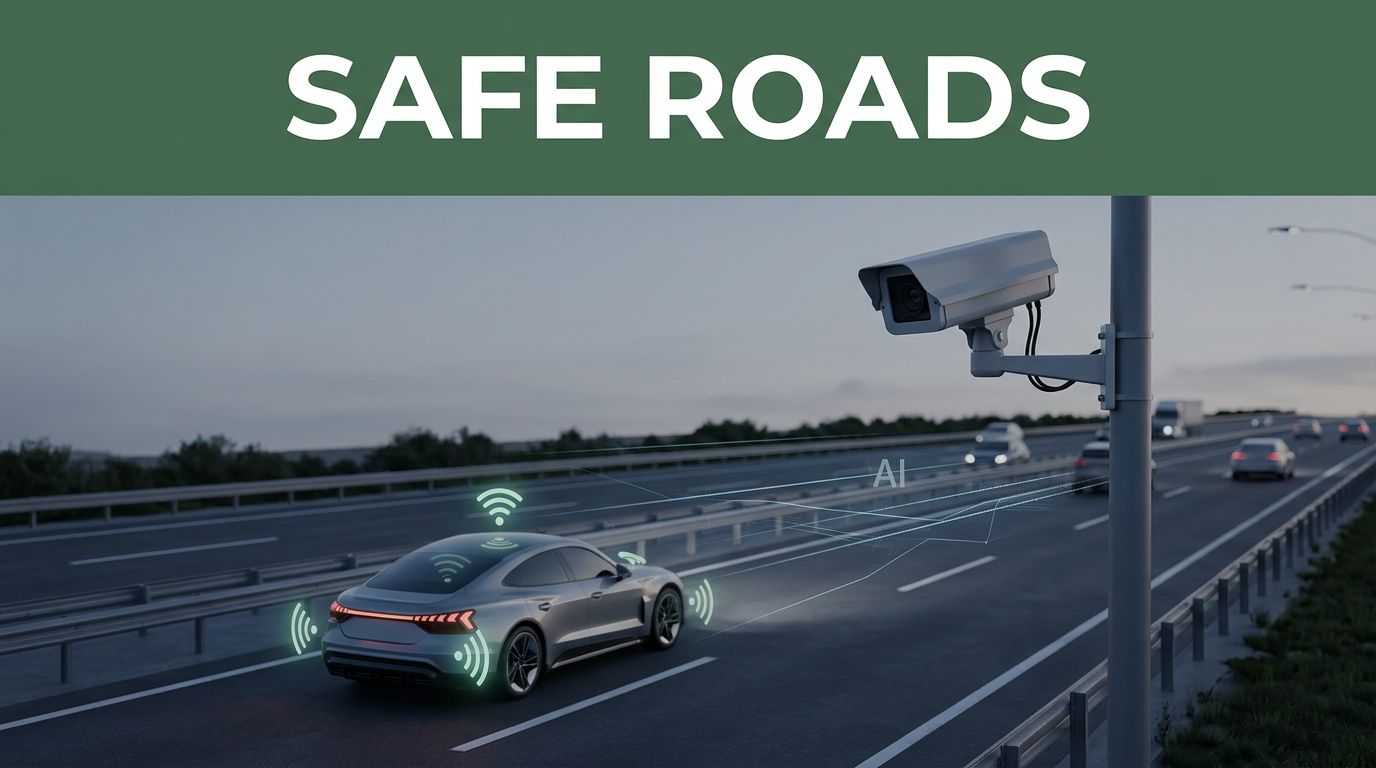
That’s where road safety monitoring systems come in. They use smart cameras, onboard sensors, and AI to watch conditions in real time. Some focus on the driver inside the cab. Others watch intersections, lanes, and work zones. Many also connect vehicles to each other and to nearby infrastructure.
The key idea is simple: monitoring helps you catch risky behavior early, then respond right away. That response can be an alert, a coach, a speed warning, or an enforcement signal. Done well, it reduces crashes by stopping the mistake while there’s still time to correct it.
Next, let’s look at the biggest ways these systems improve road safety, from AI dashcams to speed limit tech and roadside sensors.
Catching Driver Mistakes Before They Cause Crashes
Road safety monitoring systems act like a second set of eyes. They spot patterns humans miss in the moment. A quick drift, a glance at a phone, or a sleepy nod can all show up earlier than a crash ever does.
In fleets, that matters even more. Trucks and buses carry heavy loads and high speeds. One bad second can turn into major damage. AI-based monitoring helps catch that “almost” moment.
Many systems also turn incidents into coaching. That changes behavior over time, not just during one event. Safety reports from Lytx analyze billions of miles of fleet driving, which helps show what risks show up most often and when. If you want a sense of what large-scale monitoring finds, see Lytx 2026 Road Safety Report.
Here’s what real driver monitoring often covers:
- Distraction detection: phone use and head-down behavior get flagged fast.
- Drowsiness signals: eyes closing and head nods trigger alerts.
- Lane drift: sudden lane changes or weak lane centering get noticed.
- Close following: rapid gap shrinkage can prompt immediate warnings.
- Seatbelt monitoring: unbuckled driving becomes harder to repeat.
Alerts matter because response time matters. Many systems use vibrations, tones, or spoken prompts. Some show brief coaching clips after a flagged event. Others send summaries to a safety manager.
When fleets use this approach consistently, they often report fewer risky events. Industry reviews cited in recent safety coverage also point to major drops in accidents for teams that monitor both behavior and outcomes.
AI Dashcams That Watch Inside the Cab
Driver-state monitoring is one of the clearest wins for road safety monitoring systems. Instead of only recording what happened, AI watches for what’s happening now.
Think of it like a “seatbelt alarm,” but for attention. If you watch a driver long enough, you can spot patterns before the dangerous move. AI dashcams do that by looking at facial and head movements, steering behavior, and sometimes eye cues.
Common triggers include:
- Eyes closing or long blinks that suggest drowsiness
- Head nodding that can line up with fatigue
- Phone in hand or repeated glances down
- Lane drift that grows during distraction
- Close gap events that often precede rear-end crashes
When the system detects risk, it can alert the driver right then. That prevents “I didn’t notice” from becoming the final excuse.
For fleets, this also creates training data. Safety teams can review clips and coach drivers on specific moments. Lytx’s reports often describe monitoring at massive scale, which is useful because it helps fleets compare what they see to broader patterns across commercial driving.
Cost savings can follow quickly when monitoring prevents wrecks. Some fleet programs also cite savings in the thousands per vehicle range due to fewer crashes, lower claims, and better compliance. Your exact results depend on routes, driver base, and rollout quality, but the logic is steady.
The best monitoring systems don’t just record. They help drivers correct behavior in real time.
Speed Limit Tech That Actually Works
Speeding is dangerous because it compresses reaction time. A small mistake becomes a bigger crash when speed is high. That’s why Intelligent Speed Assistance (ISA) is getting more attention.
ISA devices use GPS and digital map data to determine the posted limit. Then they warn the driver when they exceed it. Some versions warn only. Others intervene with limits that gently prevent the car from going beyond the allowed speed.
If you manage vehicles, it helps to know how ISA typically works. The AAMVA page on Intelligent Speed Assistance explains how ISA uses vehicle tech like GPS and speed maps to provide feedback or intervention.
In 2026, fleets also keep pushing for practical rollout plans. For a US-focused look at implementation best practices, read IIHS guidance on rolling out anti-speeding tech. It’s especially useful if you worry about staff buy-in, training, and how to match ISA to real routes.
The big safety point is not “perfect speed forever.” It’s fewer runaway moments. When speeds stay steadier near limits, crash risk drops because braking, steering, and visibility all match the situation better.
Also, ISA pairs well with other monitoring. If a driver gets distracted and speed rises, you don’t want separate problems. You want one system that corrects both.
Roadside Cameras and Sensors Keeping Everyone Safer
Driver monitoring helps with inside-the-cab risk. But many crashes start outside. Intersections, merge areas, and work zones can overwhelm human attention.
Roadside monitoring systems address that with AI traffic cameras, radar, and sensors. They can watch for phone use, seatbelt compliance, unsafe driving patterns, and even queue spillback near signals.
One reason these systems work is that they don’t need the driver to notice anything first. They detect risk on the road and then trigger the right response. That response might be an alert, a faster operator response, or enforcement evidence.
In work zones, this matters a lot. Workers often set up cones and lane changes, but drivers still speed through. A few seconds of too-fast driving can cause a serious injury.
Systems that combine radar and video can detect fast-moving vehicles earlier than a human eye. Then they can alert workers before the threat arrives.
Omnisight describes this approach in its work zone safety overview. It focuses on real-time detection and instant alerts aimed at preventing crashes before they occur. The goal is not to “catch” drivers after the fact. It’s to protect crews by getting warnings out early.
Enforcing Rules Without Pulling You Over
Some roadside camera systems help reduce specific hazards like seatbelt use and phone distraction. AI vision can detect risky behaviors from multiple angles.
Then, instead of random stops, authorities can use consistent data. That can support enforcement policies that deter bad driving. It also reduces the chance that a pattern goes unnoticed for months.
From a safety perspective, enforcement plays a second role. It pushes behavior changes beyond the initial drivers who get alerts. If enough people learn that risks get detected, fewer people repeat them.
Protecting Highway Workers from Speeding Cars
Work zone safety is where roadside monitoring can feel almost “urgent.” Workers need time to react. Drivers need clear visibility of the danger. Those two needs must align.
Multi-sensor approaches help because each sensor has limits. Video struggles in heavy rain or glare. Radar can get noisy in some cluttered areas. When you fuse signals, the system can reduce false alarms and better identify real threats.
A helpful research example is Lessons Learned from the Real-World Deployment of Multi-Sensor Fusion for Proactive Work Zone Safety Application. It discusses how fusion systems work in real deployments and why sensor choice and calibration matter.
A vivid scenario shows the value. Imagine a truck approaches a work zone at high speed. A camera may not confirm speed fast enough, and a worker may not spot the danger until it’s too late. With fusion sensing, the system can identify the fast vehicle first, then trigger warnings early. Workers can step back, pause tasks, or adjust lane safety.
That’s how monitoring improves road safety: it shortens the time between hazard detection and protective action.
Cars Talking to Each Other for Hidden Danger Alerts
Some dangers don’t show up until the last moment. That’s true at intersections, in bad weather, and around corners. Even careful drivers can miss a hazard when visibility drops.
That’s where vehicle-to-everything (V2X) comes in. V2X lets vehicles share safety messages with other vehicles, traffic signals, and sometimes roadside units. It supports warnings like:
- Brakes detected ahead, so you can prepare
- Slowdowns near intersections, so you can adjust earlier
- Hazards around corners, where line of sight fails
Real-world benefits depend on build quality and coverage. But the direction is clear. Monitoring becomes wider than one car. Instead of one sensor watching one driver, the road scene becomes shared.
For context on where infrastructure-linked V2X may land, see V2X infrastructure and safer intersections. The page summarizes planning concepts tied to signalized intersections and safety goals.
There’s also a second layer: better “prediction.” In 2026, many road safety systems still sit inside Level 2 and Level 3 driver support. They use cameras and radar to track lanes and objects. Then, AI predicts what could happen next.
Add V2X on top, and predictions can improve. A car can learn about a slowdown before it appears in its headlights. It can also receive data about traffic light timing or nearby vehicle braking.
Meanwhile, industry pressure for crash prevention keeps rising. Safety standards and testing programs push automakers to prove that systems reduce crashes. Driver monitoring plays a role here, too. If the car warns the driver but the driver never pays attention, the system can’t help much.
Future features may include impairment detection and safer automatic responses during emergencies. Even then, the foundation stays the same. Monitoring identifies risk early, then it forces action before impacts happen.
Proof from the Road: Numbers Showing Real Safety Gains
Skepticism is fair. Nobody wants marketing math. Still, the data points in one direction: driver error dominates crashes, and monitoring targets the behaviors inside that driver error.
Recent US data shows driver behavior at the center. Driver error accounts for about 94% of crashes overall. Distraction alone caused 3,275 deaths in 2023 and about 324,800 injuries. Risk jumps with phone use, and teens face higher exposure.
Now add early 2026 distraction forecasts: around 3,250 deaths and 360,000 injuries linked to distractions. Those are huge numbers, so even small behavior shifts can matter.
Here’s a quick look at what road safety monitoring systems aim to reduce:
| What monitoring targets | Why it matters | What systems do |
|---|---|---|
| Phone distraction | Reaction time slips fast | Alerts, coaching clips, and compliance tracking |
| Drowsiness | Micro-sleeps can appear suddenly | Driver-state warnings before lane errors worsen |
| Speeding | Risk rises when braking time shrinks | ISA warnings or speed limiting based on GPS limits |
| Close following | Rear-end crashes often start as “too close” | Real-time alerts to increase headway |
| Unsafe work zone driving | Workers need early warnings | Roadside detection and fast alerts to crews |
Fleet programs and safety reviews often report fewer accidents when monitoring runs consistently across drivers and vehicles. Some reports describe 30% to 40% fewer accidents for fleets that adopt full monitoring, with additional drops in risky events.
The big takeaway is that monitoring systems don’t only prevent the final crash. They help prevent the chain of small mistakes that leads to it.
Safer roads start with monitoring, not hope
If you open with a hard truth, it’s this: most crashes link back to driver behavior. In March 2026, the clearest fix starts by catching risky behavior early.
Road safety monitoring systems improve safety through instant alerts, coaching that changes habits, and tech like ISA that keeps speed closer to posted limits. Roadside cameras and sensors add protection where drivers can’t see hazards clearly. Then V2X helps share warnings across vehicles and infrastructure.
So what’s the next step for you? If you manage a fleet or you’re part of a transportation team, prioritize practical monitoring rollouts. Ask which behaviors get detected, how alerts work, and how training follows. If you’re a road user, keep an eye out for ISA pilots and emerging V2X builds, because the trend is moving toward fewer surprises on the road.