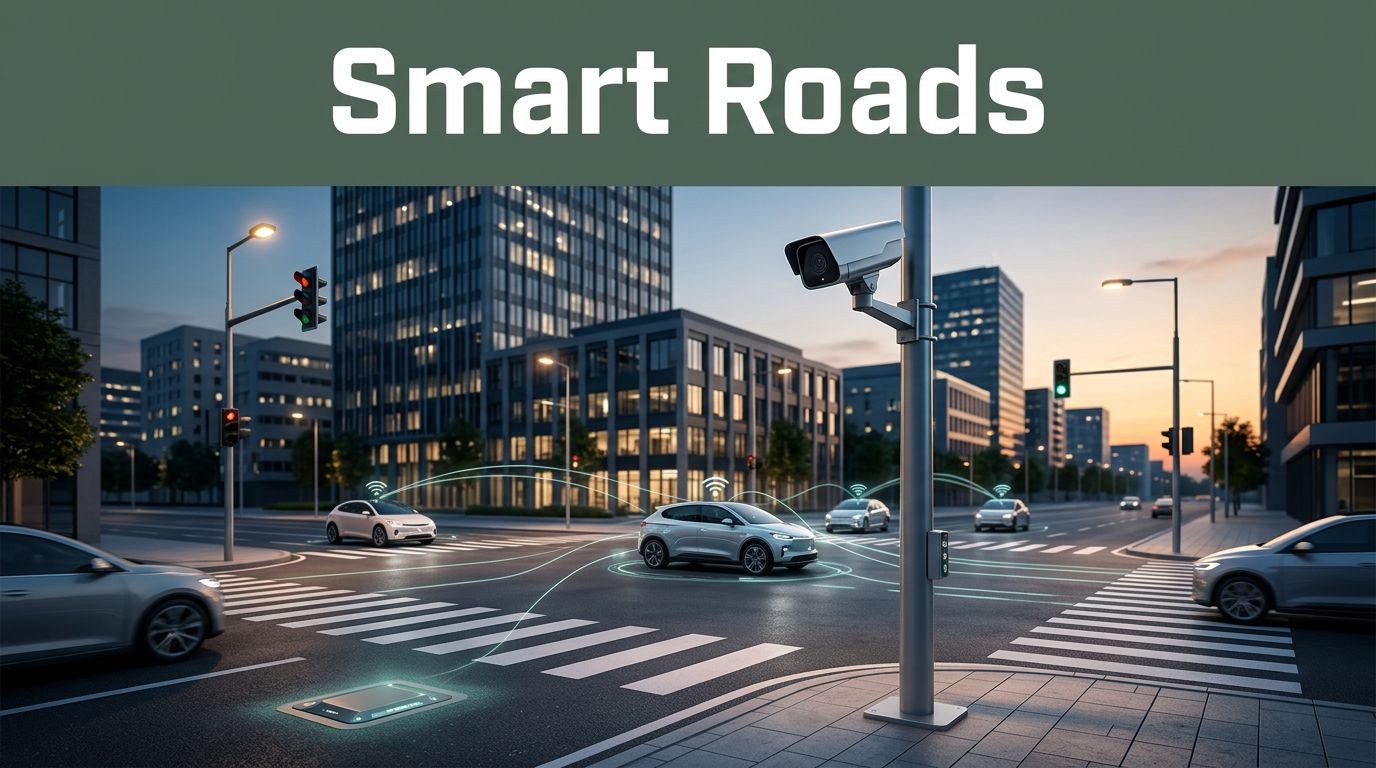
Traffic jams can trap an entire city in the same slow loop. You leave “on time,” then spend the next hour moving a few blocks. That frustration is exactly what the future of traffic monitoring technology is trying to fix.
Today, traffic monitoring mostly means watching roads with cameras and simple sensors. These tools help officials spot speeders, count vehicles, and time traffic lights. Still, they often react late, especially during bad weather, major events, or sudden road closures.
In the years ahead, smarter systems will look farther ahead. They’ll use AI to understand what’s happening on the road, and they’ll share that info quickly across signals, vehicles, and control centers. The result could mean fewer crashes, less idling, and smoother trips. Next, here’s how we get from today’s tools to what’s coming next.
How Today’s Tech Sets the Stage for Tomorrow’s Roads
Most cities already use traffic monitoring that’s built like a “watchtower.” Cameras and road sensors track what passes by, and controllers adjust signals based on set timing plans. For example, you might see cameras flaging speeding or running-red violations, while magnetic loops or radar sensors count vehicles on key lanes.
The challenge is speed and context. Cameras can miss details in heavy rain, glare, or snow. Sensors can lose accuracy when traffic patterns change fast. Even when data is reliable, many systems still wait for humans to notice a problem and then react.
Meanwhile, real-time upgrades are spreading. In March 2026, US cities are increasingly using tools that mix live feeds with historical patterns to forecast congestion. StreetLight Data, for instance, launched a traffic forecasting tool on March 13, designed to plan detours and warn drivers when closures, crashes, or events shift traffic flow.
At the same time, other systems aim to reduce “blind spots.” Omnisight’s FusionSensor combines video, radar, and on-site AI to count cars, bikes, and walkers without needing huge staffing. Berkeley research also points to faster data for city teams, which can improve safety responses.
The future depends on one simple shift: from watching after the fact to understanding what’s likely to happen next.
AI and Computer Vision Taking Over Cameras
AI camera systems act like extra eyes that don’t blink. Instead of only detecting motion, computer vision can classify what it sees, like a phone in-hand, a missing seatbelt, or a vehicle crossing a line. Some setups also pair video with automatic number plate recognition (ANPR), which checks details right away.
That matters because many traffic violations happen in seconds. AI can scan those moments quickly, even at night or during poor visibility. In US coverage of AI-driven traffic light projects, officials describe how cameras and sensors help adjust signals in real time at busy intersections (see AI traffic cameras ease congestion in Pennsylvania).
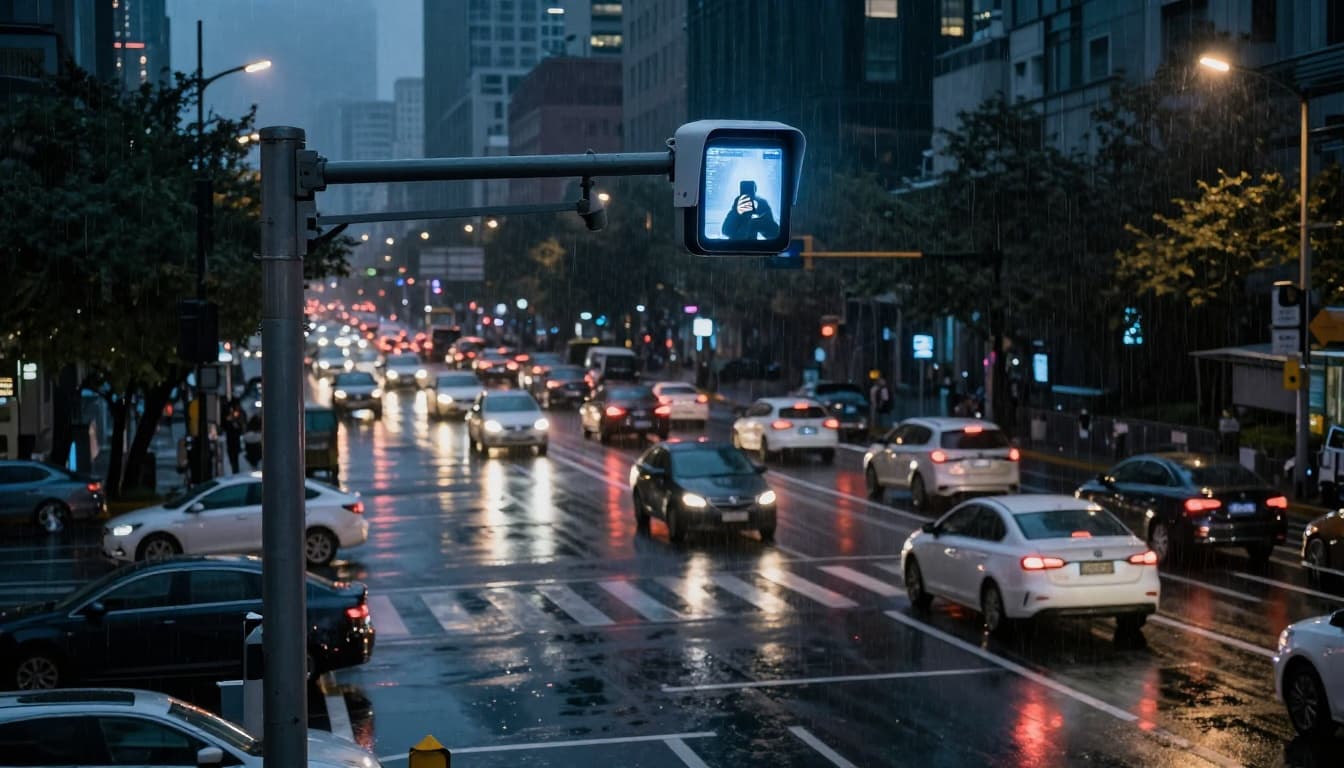
AI is also getting better at handling messy scenes. It’s one thing to detect a car. It’s another to understand risk when traffic is dense, lighting is uneven, and drivers behave unpredictably. As these models improve, cities will move from basic enforcement toward richer traffic understanding.
Sensors and Drones Filling in the Gaps
Even with strong cameras, roads still have tricky spots. Curves, underpasses, construction zones, and nighttime glare can hide what matters. That’s why the next wave uses more than one sensor type.
Smart sensors mounted on poles and near intersections can feed cleaner data to AI models. Instead of relying only on video, these systems can use radar or other signals to count vehicles and detect slowdowns. When those inputs connect to analytics, you get a fuller picture of road conditions, including near-real-time counts of cars, bikes, and pedestrians.
Drones can help too, especially during events or incidents. They can cover large areas quickly when ground crews need support. Plus, drones fit well with planning needs like routing during closures.
The key theme is connectivity. When sensor feeds share data through IoT-style systems, cities can compare current conditions with patterns from the past. Then, AI can spot trends earlier, like a developing queue before it becomes a full slowdown.
In short, future monitoring will feel less like one camera watching one lane. It’ll look more like a network watching the whole corridor.
Smart Connections That Make Traffic Smarter
Monitoring becomes truly useful when it changes how signals and alerts behave. That’s where vehicle-to-everything (V2X) and “smart intersection” setups come in. V2X aims to let cars talk with lights, signs, and other vehicles. Instead of warning drivers only after a problem grows, the system can share messages sooner.
Cities also want better planning tools. Digital twins, which are virtual models of city streets, help teams test signal timing and routing changes. They can simulate how a closure might push traffic onto nearby routes.
However, the biggest change isn’t just more data. It’s faster decisions at the edge, plus shared updates across systems.
V2X and Predictive Analytics in Action
V2X is built for warning. It helps vehicles receive alerts about hazards ahead and can support changes to signal timing based on real traffic conditions. For a practical look at how V2X connects traffic signals to vehicle data, see V2X for smart traffic signals.
Predictive analytics also plays a big role. It uses past patterns and live inputs to estimate what’s likely next, such as where a crash may occur due to speed and volume, or where a queue will form after an event.
Some cities already show the value of earlier alerts and coordinated traffic control. Virtual queue systems in places like Pennsylvania and Minneapolis have been tied to fewer crashes and better road use. The March 2026 updates note that virtual queue alerts can cut crashes by up to 23%, and PennDOT results have reported a crash drop around 11% with improved flow.
The future looks less like “signal timing updates.” It’s more like traffic management that anticipates human behavior.
Edge Computing Speeds Up the Whole System
Waiting for cloud processing adds delay. Edge computing reduces that delay by processing data near the camera or intersection.
When AI runs on site, it can flag issues quickly. That means alerts can happen faster, and signal teams can act sooner. It also helps when internet connections are spotty or when video feeds are too heavy to send for every second of footage.
Some vendors now market edge-ready systems for tough weather monitoring. The goal is consistent counts and detection, even when visibility drops. Faster responses matter most in dense areas, where a small delay can ripple into a longer jam.
Real Wins and What’s Coming Next
The near future is already showing results. Dubai’s Roads and Transport Authority (RTA) uses AI traffic signal systems and digital twins to adjust lights based on traffic flow. In 2025, Phase 1 testing boosted flow at key spots by 16% to 37%, and travel times dropped 10% to 20%. By Q3 2026, the rollout aims to cover 300 intersections.
In the US, cities are also rolling out systems that support real-time enforcement and faster incident response. Some of those efforts focus on AI cameras for violation detection, plus signal adjustments powered by new data tools.
Leading Projects Lighting the Way
A few names keep showing up in the smart-traffic conversation. Dahua, for example, has presented ITS solutions tied to AI at Intertraffic Amsterdam 2026 (see Dahua ITS solutions at Intertraffic 2026). Other real-world projects in the US point to AI cameras and signal systems that reduce congestion during peak hours.
The pattern is clear: cities want fewer failures, faster insights, and better coordination across devices.
Bold Predictions for Smarter Cities by 2036
Over the next 5 to 10 years, expect traffic monitoring to get more “closed-loop.” That means signals react not only to current conditions, but also to predicted outcomes. Digital twins should become more common as planning tools, because they help teams test changes without disrupting real traffic.
V2X is also likely to spread unevenly, first in corridors and intersections with strong infrastructure support. Meanwhile, edge AI will keep growing because speed matters. If an alert takes too long, it arrives after the moment of impact.
By 2036, the biggest wins may not be about catching more violations. They’ll be about reducing stops, smoothing flow, and preventing crashes earlier through better information. If cities cut congestion by even 20% to 30% in key areas, the ripple effects could include lower emissions from idling and safer streets for everyone.
Conclusion
The traffic monitoring future starts with a simple idea: don’t just watch the road, understand it. From AI camera vision to smarter sensors and V2X-connected alerts, systems will get faster at spotting problems before they blow up.
If you want a practical way to judge progress, watch for three signs in your city: quicker incident response, signals that adapt to real conditions, and clearer driver guidance during slowdowns. Once those appear, better safety and smoother trips usually follow.
When the next jam hits your commute, it might not be random anymore. It could be the result of monitoring tech learning from patterns, then acting sooner.